

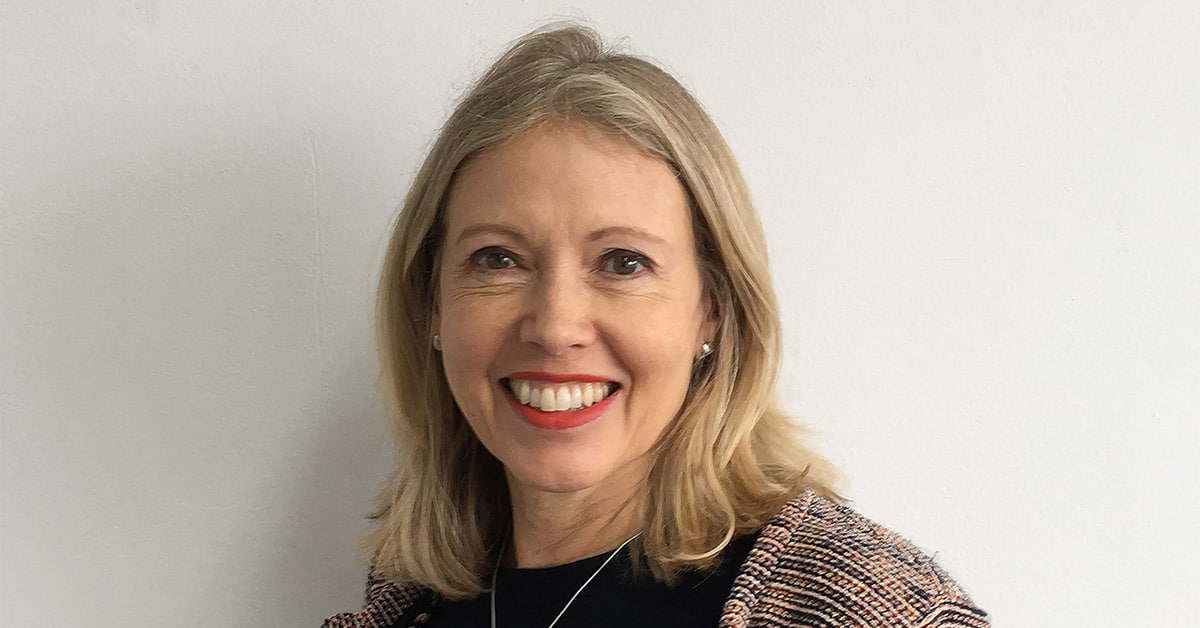
Nicky Davies Williams, CEO of DCD Rights, offers her perspective on navigating the international drama business as an independent distributor, working with producers to cobble together financing and driving monetization across the long tail.
How do you assess the overall state of the international scripted business right now? What’s your temp check on the landscape?
Tightly scripted programming remains in demand worldwide. Jo Spain’s script for The Last to Disappear, based on her novel, is a shining example. For premium drama, the market head-turners are named cast (as is evident in Fortitude Valley starring Rupert Everett and Hunter Page-Lochard, which we are launching at MIPCOM) and reimagined intrigue, with high stakes that ramp up over what is a sweet spot of six episodes. Closed episodic cozy crime remains a staple for many channels, with eight to ten episodes per series, such as My Life is Murder. U.K. drama remains well regarded internationally, which gives a head start for the likes of our new Sharon Rooney drama, An Impossible Way to Die. Largely, producers have to find a home channel with a realistic gap for distributors to fill, or, if not, work with a distributor to add an international presale in addition to advance funding. The recent push from Pact and the industry in general to increase government support will make the U.K. market more competitive against what is a stronger push for tax breaks supporting local production in specific territories internationally, which can be very attractive to producers, with many productions necessarily locating overseas, such as in the Baltics, to fill those gaps.


In co-pros, how do you structure creative control and financing across multiple partners?
If there is one international anchor partner in addition to the home broadcaster, then we will often work with them for script approval if appropriate. Most partners are experienced in this system and generally very professional as part of the team. Presales can underwrite ongoing finance, and if the key cast can be retained or added to, with the same levels of writing and execution, then most partners will rely on a distributor to consult on specific issues of sensitivity (suicide, bad language, and the like), and approve the overall premise and story lines, but beyond that will rely on the producers and the distributor to be sensitive and arbitrate on their behalf. Keeping in touch and advising progress is important. At the get-go, it may be helpful to have some local cast, but generally this will be early stage, and most channels realize that a new cast member sits best if it is included organically.
As streamers become more open to non-exclusive rights, co-exclusive runs, and shared windows, how are you sequencing windows to maximize lifetime revenue for high-end drama?
The growth of the co-exclusive options open to packaging a new series, as well as limited exclusive windows, gives a more fluid and interesting structure available to distributors in order to help finance and make money for our clients. Ultimately, it all comes down to money. If you have something strong enough to move the dial for a channel, then they will pay for more exclusivity.
How do you see demand for library fare right now as commissioning budgets are squeezed?
Scripted series that had first-run broadcast sales a few years ago are increasingly in demand for second run on channels’ digital sites and are charting well there. Hidden Assets is now up to three seasons, with early seasons performing well for many channels on their digital catch-up channels, particularly when launching a new Hidden Assets series. Library sales for The Secrets She Keeps and Rake are both performing well in the U.K., for example, as well as Janet King.
Internationally, long-running series such as Taggart have good procedural and name recognition. A well-maintained library is increasingly important, with sales execs who know the details and are able to direct buyers towards their needs with quick service, availability, and delivery.