


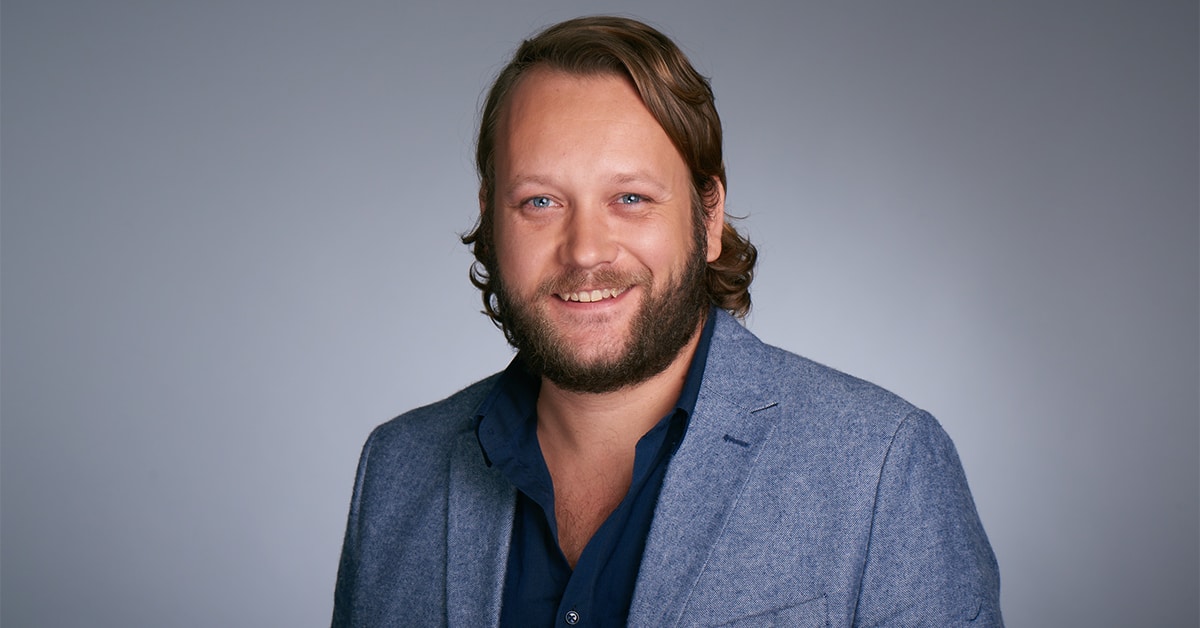
Seven.One Studios International is prioritizing “bold and distinctive” format IPs this MIPCOM to combat risk-aversion and play to its strengths, Tobias Schulze, SVP of global sales, tells ScreenMDM.
In this wide-ranging conversation, Schulze discussed the types of formats breaking through, the role of branded entertainment and the crucial role of franchise management.

What’s your assessment of the health of the overall non-scripted entertainment sector right now?
It’s a challenging market. Buyers are understandably taking fewer risks and looking closely at cost efficiency, which makes it harder for entirely unproven concepts to get on air. There is a clear appetite for established brands with a proven track record and a strong audience proposition. That plays to our strengths: Seven.One Studios International has a deep catalog of proven international IP, from Snowman Productions’ Married at First Sight and Stranded on Honeymoon Island to cooking competition The Taste, produced by Redseven Entertainment for SAT.1, while continuing to bring bold, distinctive new ideas to the market, such as the new game shows we’re taking to MIPCOM. We have the award-winning format Captcha, produced by Thinketers for La 2 (Spain), an irreverent and deceptively simple quiz format that tests contestants’ humanity; and seductive dating show Eden, from Redseven Entertainment for Joyn, that places 13 singles in paradise to find love—but every romance is tested by regular lie detector interrogations, and each lie costs the group from a shared cash pot.
What types of formats are you seeing particular traction on? Competition, dating, easy-to-produce game shows?
Our biggest brands continue to generate the strongest interest. Seven.One Studios International is particularly known for factual entertainment formats, with strong demand for dating and reality formats such as Married at First Sight and Stranded on Honeymoon Island, social experiments including CPL Productions’ Old People’s Home for 4 Year Olds and the International Emmy Award-winning The Restaurant That Makes Mistakes, and lifestyle formats such as Buying Blind, which has picked up new commissions across Europe this year, and My Restaurant Rocks, which has generated several long-running local versions, with 17 seasons in Germany (kabel eins) and France (TF1), nine in Italy (Sky Uno), and five regional productions in Spain. At the same time, we’re seeing growing appetite for “lighter,” cost-efficient entertainment led by celebrities or influencers, such as the new launch Jungle Divas, produced by Redseven Entertainment for Joyn; and crowd-pleasing, big prime-time game shows such as another new launch, A Very Good Quiz, from format powerhouse Florida Entertainment, which has been huge for ProSieben and is heading into its third season this fall.
What role do you see branded entertainment playing in the non-scripted format space right now?
It’s increasingly important, particularly as financing becomes more challenging. Brands are looking for ways to reach specific audiences in environments that feel authentic rather than interruptive. The entertainment industry has learned a lot from social media in this respect: successful brand integration needs to feel native to the content and meaningful to its audience. Samsung’s partnership with Joyn around season three of the adventure format The Race, fronted by online influencers, is a strong example. We’re bringing Track Me Down and Four Elements to MIPCOM, two exciting new adventure formats also from studio flitz for Joyn. Both combine fast-paced adventure and gamification, and offer strong branding opportunities around adventure, digital audiences and talent.
Broadcasters are seeking concepts that will work in on-demand and linear environments. How are you approaching that need? What makes for a format that can live seamlessly in different ecosystems?
The strongest formats have a compelling proposition wherever the audience finds them, combined with storytelling that creates reasons to return. Married at First Sight is a great example: in Australia it delivers record-breaking audiences across linear and on-demand year after year, while in the U.S. it successfully transitioned from Lifetime to Peacock, where the current season saw a 94% increase in viewers season-on-season, and generated over 1.2 billion viewing minutes for the streamer since launch. That longevity speaks to the strength of the brand—but also its eloquently emotional storytelling, episodic hooks and strong serial arcs. But that’s not to say new formats can’t find an audience also. Jungle Divas, which combines celebrity casting, fun and frivolity, performed very respectably on both Joyn and SAT.1 this summer.
As budgets tighten, risk aversion is expected. How risk-averse are commissioners today when it comes to new entertainment concepts? And what’s the key to breaking through those fears of trying something new?
Commissioners are clearly more cautious, particularly around unproven concepts, so the key is to reduce the perceived risk without compromising on originality. That’s where Seven.One Studios International has a real advantage. We have the backing of Seven.One Studios and ProSiebenSat.1, giving us access to proven IP and the creative talent and production expertise behind hits such as Married at First Sight, Stranded on Honeymoon Island, and The Restaurant That Makes Mistakes. At the same time, we’re not simply recycling established ideas. The sweet spot is a fresh idea with a clear, proven audience proposition. We also actively seek third-party content when it fits our catalog. Ultimately, a great idea with a clear audience proposition can still cut through.
Franchise appears to be the phrase of the day. How are you looking to build out your IPs to drive engagement between seasons?
Building enduring brands has always been central to what we do. Married at First Sight is a prime example: beyond the core series, there are multiple spinoffs and specials, podcasts and vodcasts, satellite chat shows… Broadcasters can also acquire and schedule international versions to keep audiences within the MAFS universe between seasons. The Taste has followed a similar path in Germany, where it is heading into its 15th season, with multiple spinoffs and even a touring live version. Building a franchise isn’t simply about keeping audiences engaged between seasons; it’s about world-building and ensuring there are multiple ways for audiences to organically connect with the brand—that’s key to creating IP with genuine longevity.