




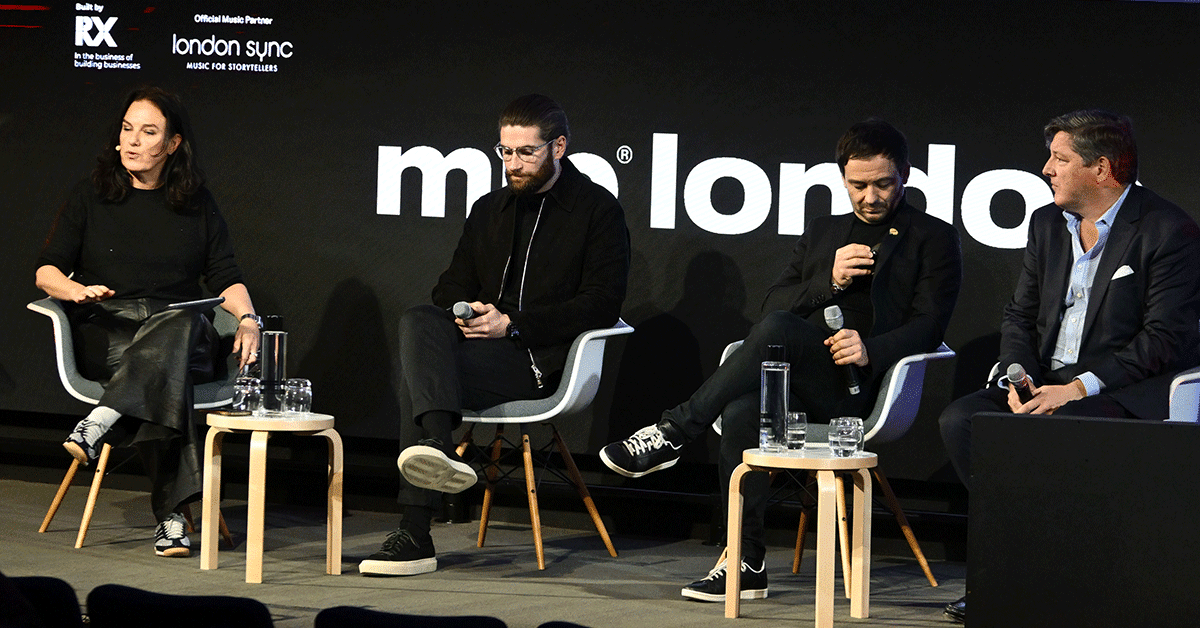
As sports continue to reshape the streaming economy, a MIP London panel featured insights from Pluto TV’s Olivier Jollet, Tubi’s David Salmon, and DAZN’s Walker Jacobs in conversation with media strategist Jennifer Batty on trends across FAST, AVOD, and hybrid models.
Sports, Batty noted, have become essential to virtually every streaming platform’s strategy, but the economics are shifting in ways that are forcing even the biggest players to rethink their strategies. Rights costs are escalating with no sign of reversing. Subscription models are under pressure from consumer fatigue. FAST and AVOD platforms are scaling globally. Creator-led content is changing how fans engage with sports, and AI is beginning to reshape how sports content is produced, distributed, and monetized.
“The question is not whether sport matters; it does,” Batty said. “The real question now is: how are streaming strategies adapting to meet these challenges head on?”
DAZN has been at the forefront of bringing sports into the FAST ecosystem, alongside its free ad-based and subscription tiers. Jacobs, global chief revenue officer and U.S. president, gave MIP London delegates a primer on the platform’s strategy for deciding what assets to place where. “Economics is the primary lens we put on things,” followed by audience expansion and super-serving fans.
The platform offers a broad lineup of sports—unlike broadcast and SVOD platforms that are solely chasing top-tier events. DAZN broadcast 110,000 live sports events in the past year alone. It has a wealth of domestic football rights across multiple Western European markets and has been sampling some live rights outside the SVOD window. “We try to be a very forward-thinking company. We try to be aggressive, we try to experiment, we try to test and learn.”
He acknowledged the results have been mixed—productive in some cases, less so in others—but framed that as a feature, not a bug, of a company committed to innovation.
Pluto TV sits purely in the free space as the world’s largest AVOD platform. Jollet leads international as EVP and GM. Free streaming is growing faster than subscription streaming, he said, and that growth trajectory has profound implications for sports rights holders, sponsors, and platforms alike.
“If you look at the data, the free ad-supported market is now growing faster than the SVOD market,” he said. “The more reach you have, the more eyeballs are going to free streaming.”
Jollet pushed back against the perception that free equates to low quality. For Pluto, premium sports content—whether live rights, highlights, or sports-adjacent programming—serves a dual purpose. It expands reach for the sports themselves, and it functions as an acquisition driver for the platform, pulling in audiences who might not otherwise have engaged with Pluto’s broader content library.
“Sports is a great driver of audience,” he said, before adding a note of pragmatism: “When you run a service like Pluto TV, which is not our core business—it’s about movies, series, documentaries, scripted and unscripted content—sports is a great acquisition driver.”
Jollet flagged a trend Batty noted at the outset: linear television reach is declining, particularly among younger audiences. For sports properties that want to remain culturally relevant to the next generation of fans, free streaming platforms offer a critical bridge.
“The reach on TV is going down, especially among younger audiences. You need to find new windows and new opportunities to reach this younger, hard-to-reach target group. That’s what a free TV platform has a huge role to play in this ecosystem.”
The Paramount-owned platform is doubling down on locally resonant sports in many of its key markets, Jollet said, such as darts competitions in Germany and bowling in Sweden, as well as fast-growing sports, including women’s leagues.
At Tubi, Salmon, managing director for international at the FOX Corporation-owned AVOD service, has seen a “blurring of the lines between how it thinks about “traditional creator output and the way that sports personalities own a direct connection to consumers.”
In addition to key sports rights, the platform is home to a range of shoulder programming that “allows fans to go beyond the live experience—people are interested in going deeper and deeper and understanding more about the personalities, the story lines, being able to dive in.”
With a view to building fandoms, Pluto TV has done some innovative sports collaborations, including with influencers. DAZN is also collaborating with influencers to drive engagement via its Team Whistle business.
Asked about monetization, Jacobs said that DAZN is “disproportionately a subscription service,” a position he expects to maintain. “That said, we have a robust and healthy sponsorship and advertising business. It’s not only about how you reach new audiences and engage in more meaningful ways, but also about how you deliver value to the brands that are helping you finance this operation.”
The issue with AVOD and FAST, he said, is that those spheres haven’t quite delivered on the revenue expectations everyone had hoped for. “We’ve had to be creative in how we approach that and unlock extra value. It’s very good in programmatic and audience buy-in, and delivering scale across a variety of channels. But in terms of a sponsor interested in a speciifc sports, say darts, the way they’re buying that and the way they want to activate that, I don’t think we’ve fully unlocked it. As a result, it creates an opportunity going forward.”
Jollet weighed in on the importance of educating advertisers about the shift to ad-supported streaming platforms, the premium inventory they offer, and the ability to reach younger audiences.


