


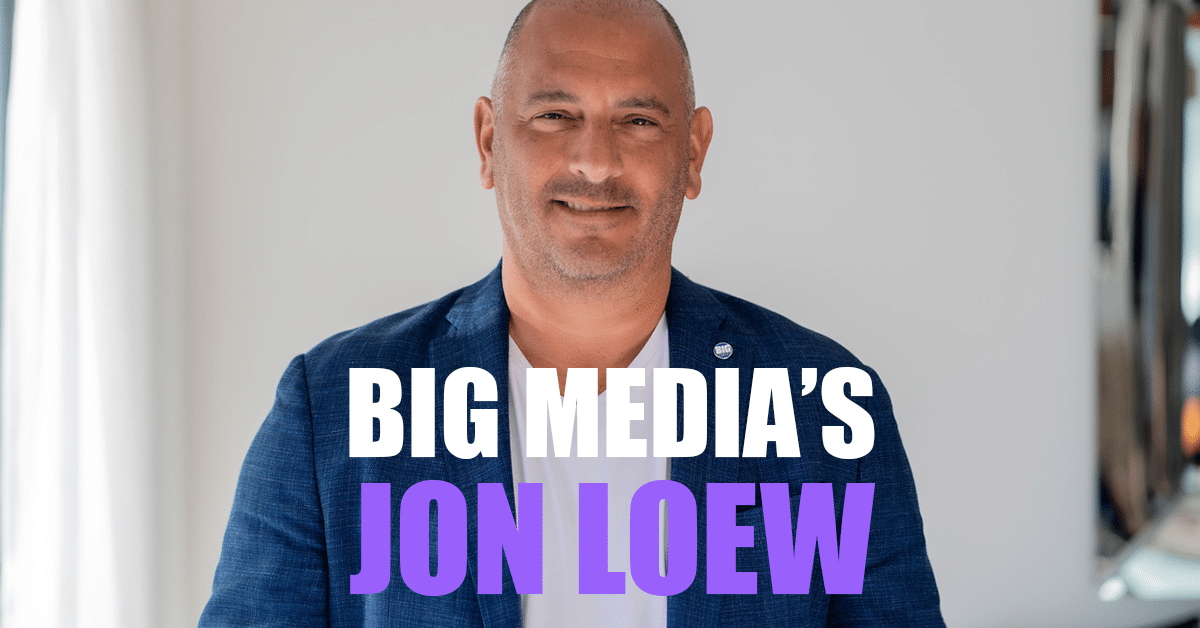
ScreenMDM kicks off its new Real Talk strand with an insightful conversation with Jon Loew, CEO of BIG Media, about the company’s recent CIA series on National Geographic, Disney+, and Hulu; navigating seismic shifts in the business; evolving funding models; and the importance of volume.
Since its formation in 2009, BIG Media has made more than 100 shows and built up a factual catalog of more than 4,000 hours. Navigating the business today requires making “change your best friend,” Loew tells me in the latest episode of ScreenMDM Talks, which you can watch on YouTube below or access on Spotify and Amazon Music. “It’ll be the only thing with you for your entire life.”

The business has certainly had its share of twists and turns since BIG Media was created, including the downturns in the DVD and cable channel sectors and the rapid proliferation of streaming platforms. “Because we were growing our business, we were never able to get comfortable enough to settle into a familiar pattern,” he says. “So we were born into change, and we keep changing and adapting.”
One constant has been high-quality content that resonates with commissioners, buyers, and audiences. The company recently made headlines with its eight-part series Inside the CIA—Secrets & Spies, which premiered in February across National Geographic, Disney+, and Hulu in the U.S.
“We have a great history of making shows with some of the hardest-to-reach U.S. government agencies,” Loew says of how the show came to be. “And the way it typically works with those agencies is you get one shot. And if you make a show that sandbags them or depicts them in an intentionally negative way, they typically won’t want to work with you again. We chose a strategy of being objective. We had no agenda. We tell the stories like they are. Those agencies were happy with how those series were produced and said, We’ll support your next show by allowing you access to some of our people. That continued for about a decade. And then we had the opportunity to make Inside the CIA. There are so many media outlets and producers who are intentionally depicting U.S. government agencies and allies in a negative way, focusing on their mistakes and depicting them in a way that I didn’t feel matched with reality. We’ve had the honor of working with hundreds of people from the CIA, FBI, and Department of Defense, now the Department of War. These people sacrificed so much to protect the citizens of our country and other countries. Are they perfect? No. Do they think they’re perfect? Also no. Where are the shows that showed them as the humans they are? Not superstars or supervillains, just how did they become CIA officers changing the world?”
While a lot of companies got comfy with the single-commissioner, global original model at the height of the streaming wars, BIG Media did not, Loew explains, meaning it’s always been well adept in the “old now new model of global co-pros—companies around the world chipping in, sharing rights and making something premium. That is our go-to model—90% of our shows are produced using that model of spreading out the risk and the rights.”
Premium projects backed by a single major player are limited to one a year, Loew says. “The other 9, 10, 11, 12 series, we’re doing by piecing together license fees from around the world and taking some risks ourselves.”
As it continues to build its library, BIG Media has been operating in the FAST and AVOD spaces, partnering with wedotv. “Our model of maintaining IP ownership, I believe, is one of the key factors that has allowed us to weather these storms,” Loew notes. “The revenue per hour of content per platform is going to continue to go down. The only way you can offset that is by making your content available on more platforms and having more of it. Margins are going down, and the costs are going up. If you don’t have that volume, it’s going to be a problem for your business. If you don’t own the IP, it’s also going to be a problem for your business.”
As for what’s resonating with audiences today, Loew references the rising interest in short-form. “If you look at what’s eating up the legacy television industry, it’s that people under the age of 30 cannot pay attention to anything for more than 45 seconds. In fact, they have already tuned out of my answer because my answer is a minute long,” Loew quips.
As a result, the company has been working on structuring shows with clearly defined “segments that were easier to digest for people. They can have a beginning and an end in about three minutes of that segment. And they feel there’s a payoff. Our content lends itself to breaking up into clips. Our clients are often licensing the broadcast rights while also maintaining digital rights and the right to cut it up into clips. They’re maximizing the revenue per minute of our shows.”
I also spoke with Loew about how BIG Media is looking at YouTube as more than just a place to monetize library content.
“When I was growing up, there was a certain amount of content available per human being on earth,” Loew explains, “and a certain amount of advertising revenue. There are now hundreds of pieces of content per human, so it can’t possibly all be consumed. The revenue per piece of content will continue to go down indefinitely. There are no expiration dates for YouTube videos, so the supply of videos is going to increase and never decrease. We have a problem there, because eventually there will be five trillion videos on YouTube, each of which is earning one penny per year.”
BIG Media is also exploring more opportunities for fan engagement in the physical realm, Loew says.
I asked Loew about operating as an indie in a landscape rife with consolidation. “There are going to be fewer places to watch content, but they still need content. Just as the number of streamers and channels has declined, so have our competitors. So there are fewer production companies to compete with. So maybe we’re actually reaching some homeostasis where this is where the market should have been. The key is to remain calm and keep adapting.”
Loew also talked about the importance of physical markets on the heels of the end of Realscreen Summit and NATPE Global, two years since the final MIPTV.
“People are underestimating the importance of physical collaboration and exchanges of ideas—actually sitting down with people and coming up with ideas either for new shows or new business models. Solving the problems we’re talking about isn’t going to happen over email or Google Meet. It’s going to happen over a cup of coffee, a glass of wine, or a beer. People were relying too much on email and video conferences, so they stopped going to conferences like MIPTV, NATPE, and Realscreen, saying, ‘We don’t need to go there.’ People started sending smaller teams, but you have a death spiral where if people aren’t collaborating, it affects everyone. So the markets themselves collapse. A message to every company out there, big or small: you need to support the trade publications covering our industry, and you need to go to markets. This business will only survive and prosper if we’re together and we’re talking and coming up with a solution and hearing from other people in other countries about what’s working in your country.”


