
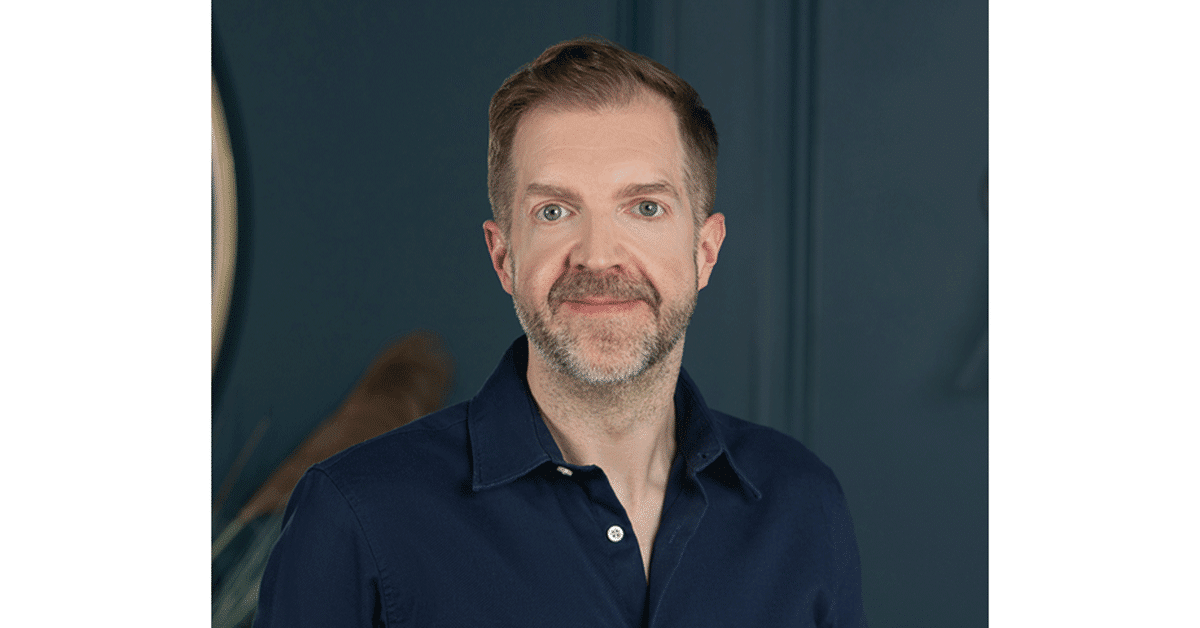
Ahead of Banijay Rights’ London TV Screenings showcase, ScreenMDM caught up with Simon Cox, EVP for content acquisitions, to discuss the trends he’s keeping an eye on in the scripted sector today.
What’s your take on what’s happening in the scripted sector right now? What are the trends that you’re particularly attuned to?
There are green shoots—the U.S. is starting to come back, and I think that wave will follow through to the rest of the world. Everywhere is a bit challenged and decision-making is slow, but there are definitely opportunities and deals being done. I think “green shoots” is almost the wrong word, because it never really died—it took a bit of a pause. But it is coming back and things are moving. I feel positive. I feel 2026 is better than 2025. And there is absolutely a place in the market for the right shows. The world still wants stories—it’s just about finding the ones that resonate.


What kinds of shows are cutting through?
It’s probably about finding things that are going to be returnable franchises, or something very noisy — something with a big piece of talent, or something so unique that it will cut through. Look at Baby Reindeer—Richard Gadd is a hugely award-winning artist. That will cut through. And then at the other end of the scale, something like Grantchester—broad-audience crime that just works. It’s finding each end of that scale and making sure you’ve got a portfolio that speaks to as many different clients as possible. You have to have things that make noise, but also things that appeal to a broader audience.
And I’m sure you’ve noticed—a lot of the biggest streamers are going towards the middle. They’re doing less of the edgy fare, so it’s almost becoming a bit free-to-air in a way. You’ve got to make sure you’ve got things that hit the right audiences.
What innovation are you seeing in funding models? How are you cobbling together budgets to deliver on scale and ambition while still making financial sense?
I don’t think things have changed that much. The traditional co-production market is drier than it’s ever been. I don’t think it’s necessarily about new models—I think it’s about being creative with your spend and your budget. How do you make your money go further? What does a package look like, and how is it going to stand out? Do you spend more on cast than on action scenes? How do you exploit tax rebates and incentives in other territories? In scripted, budgets have had to come down a bit, or it’s about packaging wisely with talent to find those pre-sale opportunities. It’s probably more about pre-sales than co-pro now.
Your role is particularly interesting within a group that already produces so much content internally. How has your acquisition strategy shifted, and are there gaps you’re looking to fill that you’re not getting from Banijay’s own production network?
We do have some amazing shows from within the Banijay group of companies, but it’s important to recognize that third-party acquisition is just as important to us as internally produced content. It’s about finding the right balance to keep your slate consistent and growing across the years—because production timescales can mean two years between series, and you need to be able to fill that gap with the right projects that fit your portfolio and our sales team’s taste. Is the strategy changing? No. It’s more about whether the genre mix is changing—what is the world looking for, and are we being served correctly by the market? The one exception I’d make is something truly unique, something different that’s never been done before, that wouldn’t necessarily fit the conventional mold. You still have to look at that seriously, because something noisy with a big piece of talent is going to cut through and find a home. You have to be creative and open-minded to new trends.
Drama takes a long time to make. How do you stay on top of what’s in the zeitgeist when you’re crafting a slate that’s going to land two years from now?
It’s an art. It’s a skill. And it’s genuinely hard to know. Every territory has very different tastes that we have to serve. The Germans tend to prefer 90-minute crime films; the Scandinavians tend to like a dead body at Christmas. So you kind of have to take a bit of a risk and trust that a good script is a good script. It’s going to come with good execution, and moods and tastes do change over time.
We do have open ears to what our buyers are saying and what they’re looking for, and that will dictate what I’m looking at. But like you say, that’s not going to change the slate for 2027; it will change the slate for 2028. And we are still a bit dictated by what the commissioners are commissioning domestically. Traditional FTA commissioners are still trying to work out how to bring a younger audience. Scripted is a great way to do that. They’re not quite there. It’s listening and adapting to what they’re doing and what they’re developing.