
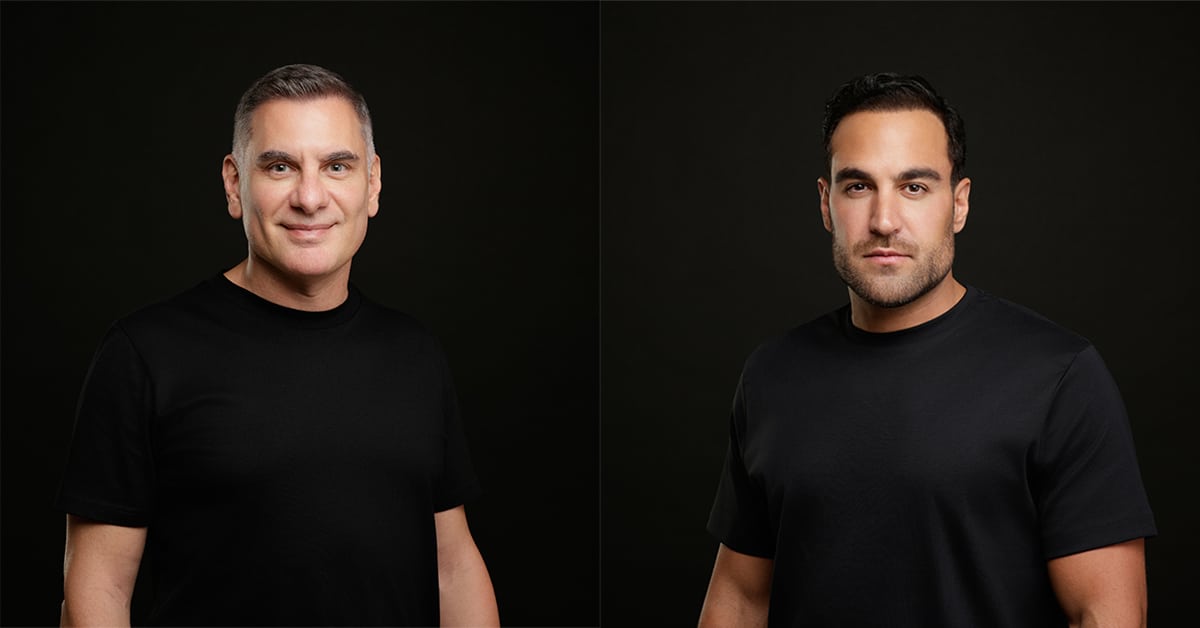
Dubai-based production outfit MForMedia is repositioning itself as an IP-based studio and is looking to raise the profile of Arabic scripted content, Khalil Homeissy and Ralph Matar, managing partners, tell ScreenMDM.
The venture has a long history of adapting international format IP in the region. It recently announced a repositioning of its operations, emphasizing original IP development across non-scripted entertainment, scripted content, digital media, and AI-enabled production.

Homeissy and Matar share their perspectives with ScreenMDM on the global drama business and MForMedia’s ambitions, highlighting soft-money opportunities across the region and their goals for putting Arabic drama on the global map.
How do you assess the overall state of the international scripted business?
Homeissy: We try to be careful with the word ‘post-peak.’ It describes a real correction in Western markets, and it is a fair description there. In the Arab world, the cycle is at a different point. More than 450 million people, a majority under 30, streaming adoption still climbing, and platforms beginning to see that regional drama can travel. So the question for us is not how to survive a contraction, but how to invest well in an expansion. The global discipline actually helps. Fewer shows, funded more carefully, expected to earn their place: that is the standard a young scripted market should hold itself to from the start.
When embarking on co-pros, how do you keep a show’s voice intact across multiple partners?
Matar: The “pudding” happens when a show is built for the financing plan instead of the audience. Our approach is simple. The voice is decided first, before any partner signs, and everything else follows. Creative control sits with the people who actually speak the audience’s language. Partners buy into that voice. They don’t get to water it down. We have spent two decades
adapting the world’s biggest formats for this region, so we know exactly what survives translation and what dies in it. Now we’re running that knowledge in the other direction. A co-production that erases what makes a story local to please a third territory has already failed. It just doesn’t know it yet.
How are you combining international soft money with private capital?
Homeissy: The region has become one of the most attractive financing environments in the world, and we think it is still underestimated. There are production rebates in Saudi Arabia, Abu Dhabi, and Qatar, active fund and grant schemes, and a growing appetite for content as an asset class. The risk is treating these as a substitute for a commission. We see them as layers. A broadcaster or platform commitment anchors the project, incentives reduce the exposure, and private capital funds the step that turns a commission into intellectual property we own. That last step is the one that matters. Soft money that only subsidizes someone else’s IP is a rebate on another company’s asset.
What trends are you watching for the next 12 to 18 months?
Matar: Three things. One: Arabic scripted finds its footing. Not a global wave yet, but the strongest shows will start drawing real interest from beyond the region, and the studios building their own IP now will be first in line when that interest turns into deals. Two: AI leaves the demo reel and enters the pipeline. Development gets faster, post gets cheaper, and the companies using it as a craft tool rather than a headline will pull away fast. Three: the wall between television and everything else is gone. Vertical drama, creator-led series, brand-funded storytelling. The audience already lives there. The industry is just catching up to where the viewers went.