


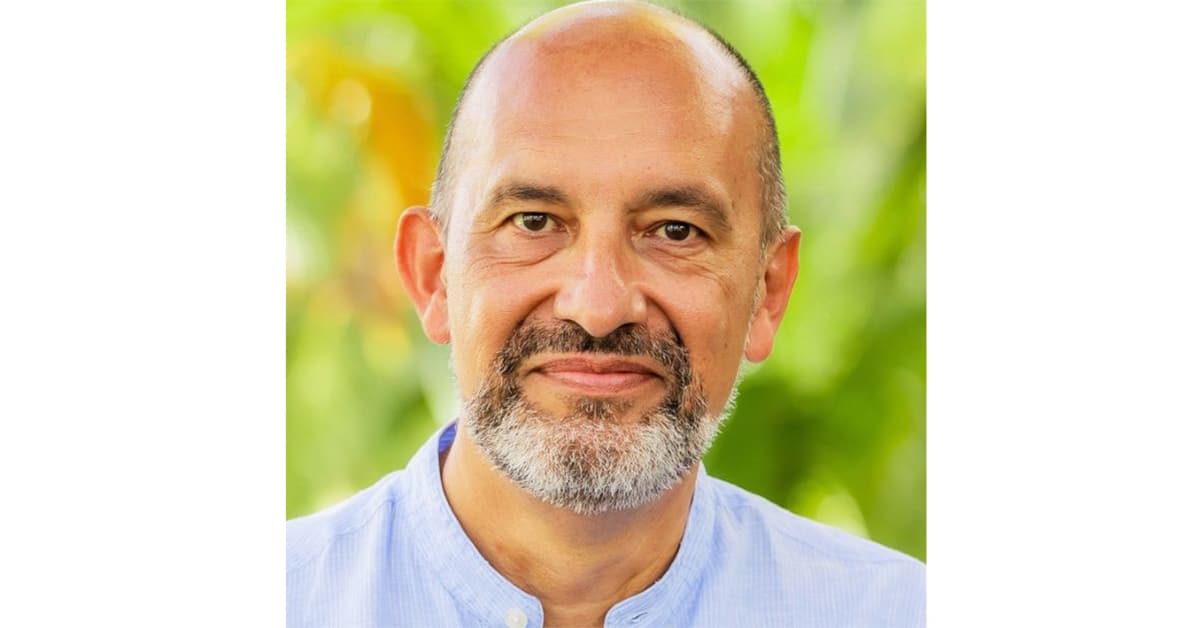
One of Spain’s most well-established screenwriters and EPs, Curry Royo, whose long list of credits includes Like Water for Chocolate on HBO Max, discusses how the country’s production landscape is evolving.
ScreenMDM Español caught up with Royo as part of our coverage of CONECTA Magaluf-Mallorca.


Royo analyzed how perceptions of television have changed within the Spanish audiovisual industry. He recalled that years ago, series were viewed with a certain condescension by the film world. In contrast, today, television has become one of the main sources of work for screenwriters, directors, and technicians. VP of Audiovisual Media Copyright (DAMA) and an active member of the Spanish screenwriters’ union ALMA, Royo pointed out that a “programmed sidelining” of screenwriters still exists within the industry.
“Everyone will tell you that the script is the most important thing, but I don’t know why the screenwriter isn’t the most important thing,” he argued. Royo also addressed the concept of the showrunner, warning that Spanish-speaking markets often adopt only the title without actually replicating the American model. In the United States, the showrunner is generally the creator and writer who comprehensively oversees the series, from the writers’ room to the final edit, “whereas in Spain and Latin America, television has historically been led mainly by producers,” he said.
Royo stressed the importance of “glocal” stories and highlighted the Recreas initiative, promoted by DAMA, which seeks to connect creators from Spain and Latin America to foster co-productions born from the authors themselves rather than solely from industrial structures. The goal, he explained, is to avoid artificial projects and generate organic collaborations between writers from different territories.
Royo also reflected on the experience of adapting Like Water for Chocolate for HBO Max. The main challenge was expanding a relatively short novel into a two-season series with 12 hours of content. To achieve this, he decided to broaden the original narrative universe by incorporating the Mexican Revolution in greater depth.
“We had to open the windows and doors of the hacienda,” he said, recalling the work done in Mexico alongside the creative team, visiting haciendas in Tlaxcala and exploring the story’s visual and culinary universe firsthand. One goal of the series was to trigger a sensory reaction in the viewer.
“We knew it was going to work when my family finished the first episode and immediately wanted to go out and eat Mexican food,” he recounted with a laugh.
A key part of the conversation explored the ramifications of AI on the creative community. “It is a massive business that has been built on stealing from authors,” he stated, pointing out that literary, audiovisual, and artistic works have been used without authorization to feed these technologies.
Although he acknowledged that AI is here to stay as a tool within the industry, he defended the irreplaceable value of human creation.
“I didn’t become a writer to have a machine do my job,” he maintained.
And he added: “A writer is the one who faces the vertigo of the blank page”.
Royo is at CONECTA, moderating a Focus Talent session dedicated to new creators and projects emerging from script development labs. He particularly highlighted the event’s close-knit atmosphere in Mallorca and its ability to foster natural encounters among talent, producers, and distributors.


