



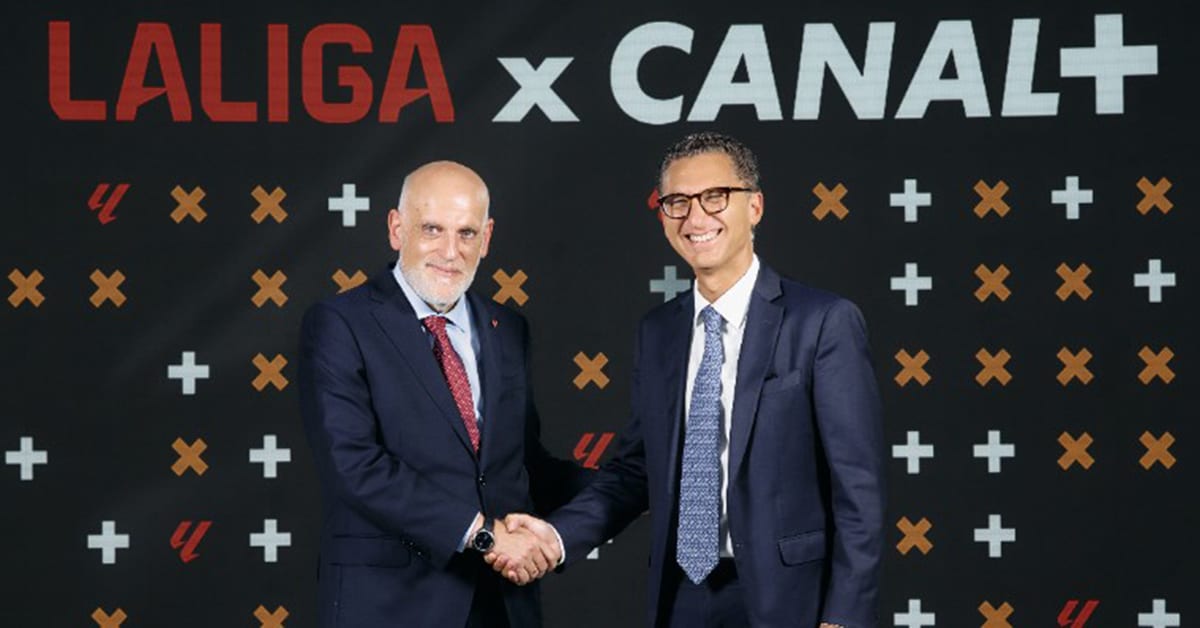
CANAL+ and LALIGA have entered a groundbreaking agreement to combat sports content piracy across Europe and Sub-Saharan Africa, as well as in Haiti.
The alliance between the global platform and the Spanish league covers nearly 50 markets in Europe and aims to take on one of the biggest threats to the sports industry, the partners said.
CANAL+ and LALIGA will pool expertise, technologies, and enforcement capabilities to accelerate action against illegal distribution networks operating across multiple territories. The partners in the initiative refer to piracy as not just a copyright issue but rather a threat to the sustainability of sport, undermining investment, innovation and the long-term value of audiovisual rights. Fans are also put at risk with the potential for personal data theft, malware, fraud and access to unregulated content.
Maxime Saada, CEO of CANAL+, stated: “The unprecedented scale of this partnership reflects the strategic importance CANAL+ attaches to the fight against content piracy. I am particularly pleased that our Group shares a common conviction with LALIGA, one of the sports leagues most committed to combating piracy: piracy undermines the entire sports ecosystem. By combining our anti-piracy expertise, we are significantly enhancing our ability to take action. All players in the sports industry, without exception, and more broadly all stakeholders in the audiovisual and creative industries, have a role to play in tackling the scourge of piracy. CANAL+ is fully assuming its responsibility, and this partnership is a call for all industry players to do the same.”
Javier Tebas, president of LALIGA, added, “Piracy is one of the greatest challenges facing the future of sports, one that no organisation can tackle this problem alone, which is why partnerships like this one are so important. By joining forces with CANAL+, we are bringing together technology, intelligence and operational expertise to protect the value of our competitions, defend the investment made by broadcasters and clubs, and ultimately safeguard the future of football.”


