

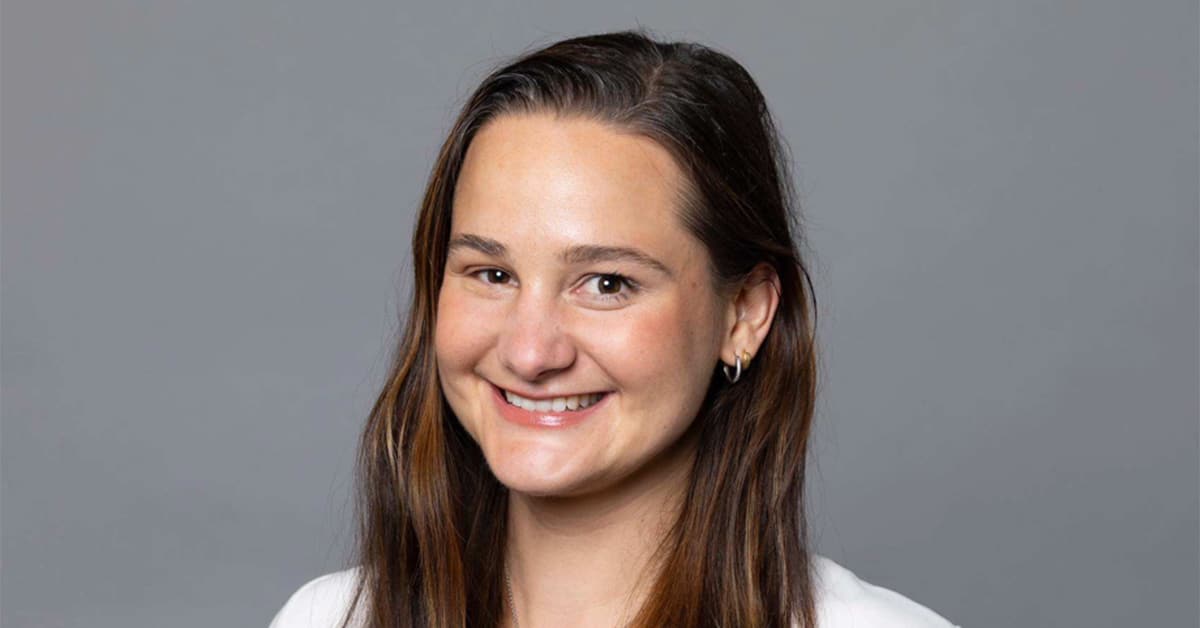
Rebecca Dundon, SVP of scripted content for global drama at Fremantle, shared with ScreenMDM her perspectives on the state of the business today, weighing in on investment and windowing strategies and the keys to successful co-productions.
How do you assess the overall state of the international scripted business right now? What’s your temp check on the landscape?

Audience appetite for scripted content remains strong. However, the market is undoubtedly more selective: it is now about fewer, bigger, and better projects, and we all have to work harder to ensure our shows cut through.
There is still a robust pipeline of premium titles coming through, but buyer demand is increasingly focused on content that is both distinctive and broadly appealing. That might come from proven IP, such as book adaptations including Close to Home, The Only Suspect and You Are Here; established brands such as Baywatch; or projects with exceptional talent attached, such as Kill Jackie, starring Catherine Zeta-Jones. Ultimately, a series succeeds when it has compelling themes, strong storytelling and characters with whom audiences genuinely connect.
Against this backdrop, it has been impressive to see the industry adapt and evolve. Partners are finding innovative ways to respond to the changing landscape, including more flexible windowing strategies, earlier collaboration, and new approaches to financing and distribution. The market may be more challenging, but the appetite for high-quality scripted content remains very much alive.
In the post-peak-TV era, how are you restructuring your deficit financing models to close budget gaps on premium series without overexposing your distribution arm?
We are seeing budgets recalibrate, with partnerships being established much earlier and collaboration between producers, distributors, and broadcasters at an all-time high.
It is essential to be disciplined and intelligent about our financial models: identifying the most efficient production locations and incentives, engaging potential buyers earlier where appropriate, and exploring new financing structures and partnerships with organizations that share our creative ambitions.
The objective is to close budget gaps on premium projects while ensuring the risk remains proportionate and sustainable for the distribution business. That requires a bespoke assessment and clear financing strategy for each project from the outset, alongside greater transparency and earlier alignment between partners. We cannot rely on a single deficit-financing model; each project needs to be structured according to its IP, market opportunity and risk profile.
Broadcasters and platforms want local specificity, yet multi-partner co-productions can run the risk of becoming “international puddings.” How do you structure creative control and financing split across multiple partners while keeping the show’s voice intact?
Authenticity is fundamental, which is why it is so important to bring the right partners onto a project as early as possible. We work hard to avoid anything that could make a series feel like an “international pudding,” creative decisions should never be imposed superficially or driven solely by commercial considerations. Audiences see through that immediately, and we strive for quality and being genuine in everything we do.
That said, co-productions are an essential part of the scripted landscape and often critical to financing ambitious projects. Where multiple partners are involved, there must be a clearly defined lead broadcaster or creative voice to lead collaboration. The key is to bring partners on board who respond to the creative vision first and foremost, who connect with the material and feel passionate about what matters to the story.
Those conversations need to happen early. We look for partners who understand what the project requires, are aligned creatively, and bring genuine knowledge of their local market. Ultimately, every deal is bespoke and depends on the IP, but the principle remains the same: financing structures should support the creative vision, not dilute it.
As streamers become more open to non-exclusive rights, co-exclusive runs, and shared windows, how are you sequencing windows to maximize lifetime revenue for high-end drama?
We approach every deal differently and are constantly finding new, creative ways to structure windows. There is growing recognition that windowing does not necessarily cannibalize audiences; done intelligently, it can increase discoverability, extend a show’s life, and strengthen its brand, benefiting all partners.
This might mean making a series available across complementary platforms, for example, through a broadcaster or streamer, followed by AVOD or FAST exposure, allowing it to reach different audience segments without undermining the value of the initial window. The sequencing will always depend on the title, territory, platform strategy, and the value each partner can bring.
Sullivan’s Crossing is a strong example. The series has sold in more than 180 territories. In the U.S. seasons one to four aired on The CW before becoming available on Netflix, with both windows performing strongly. It was The CW’s number one scripted series in the 2025–26 season, delivering record growth across linear and digital platforms, while it was the first Canadian series that went to number one on Netflix in the U.S., and seasons 1 to 3 debuted at number three on Netflix’s Global English TV Top 10. It demonstrates how carefully structured windows can expand, rather than dilute, a show’s reach and lifetime value.
How do you see demand for library fare right now as commissioning budgets are squeezed?
Our library continues to play an important role in our distribution strategy, particularly as commissioning budgets come under pressure. Established titles offer proven audience appeal, recognizable IP, and the ability to deliver value at a lower cost than entirely new commissions. The strong performance of legacy IP on new platforms also demonstrates the enduring power of nostalgia and its ability to introduce established titles to new audiences.
A strong example is Baywatch. We re-versioned the original series, which sold successfully around the world, and are now launching a new reboot. We have taken a similar approach with Homicide: Life on the Street and continue to mine and capitalize on opportunities across our legacy series through re-versioning, reboots, new platforms and alternative formats.
We are also thrilled that Wentworth, the much-loved series that ran for 100 episodes over eight series, is now in production with a new spin-off. This gives buyers the opportunity to reconnect with a cherished franchise and its global audience, while discovering a new generation of characters alongside familiar faces. The growth of vertical content, FAST and AVOD platforms is creating further opportunities to extend the commercial lives of established titles. At the same time, demand for fresh and original IP remains strong, and we are looking forward to showcasing an exciting slate of new titles at MIPCOM.
Private equity funds, regional tax incentives, and local grant schemes are critical. How are you combining international soft money with private capital models to de-risk the entire process?
Our approach is entirely project-specific and opportunistic. Regional tax incentives and local grant schemes remain critical components of our financing models around the world, helping to make ambitious productions viable and reduce overall exposure.
We will also consider private capital where it makes sense—provided the project, structure, and partner are right. The priority is to combine the appropriate sources of finance in a way that supports the production while keeping risk proportionate across all parties. There is no single model that applies to every project.