



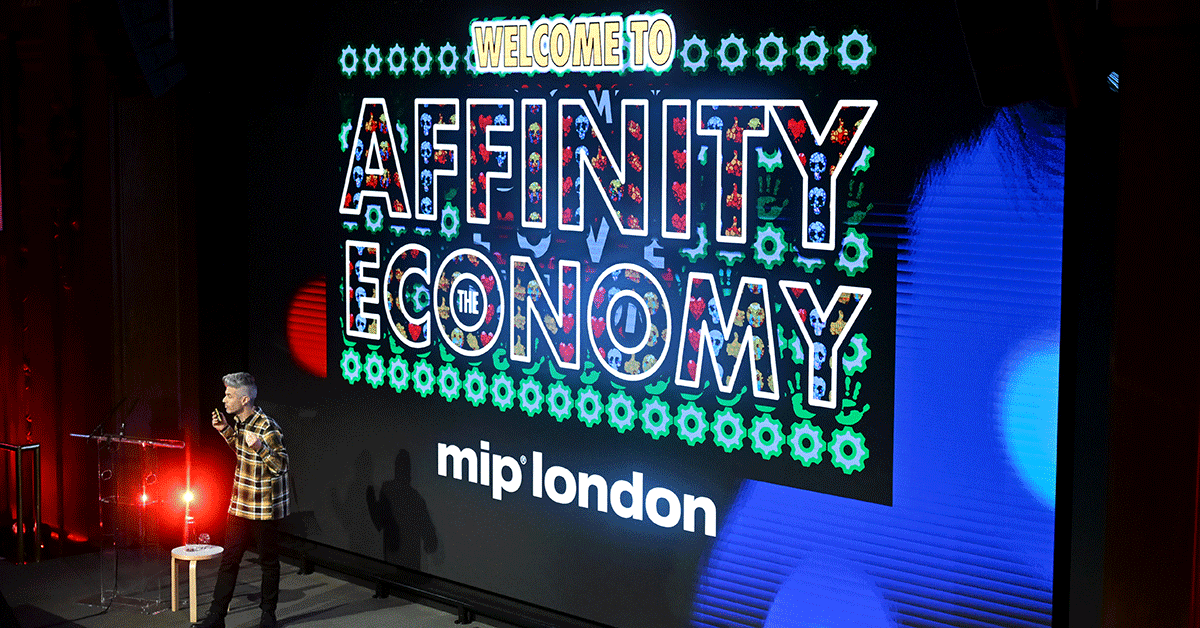
Evan Shapiro spoke to a packed room of MIP London delegates as the event wrapped this week, declaring that YouTube really is TV and that this is the year when adapting your business models to the new reality is critical for survival.
For an industry that has spent years debating whether streaming is a complement or a replacement for traditional television, Shapiro’s message was unambiguous: the debate is over. The map has been redrawn. The only question now is whether the industry’s leaders are willing to read it.
The media cartographer said his latest map was the most dramatic redrawing in years. Referencing the “Disney” metric, he said that the media giant has remained at the same value for the last five years, while other legacy outfits are “either disintegrating or collapsing.” Netflix buying into “trad media,” Shapiro said (if that deal happens), will put it in the same place as said “trad media” finds itself today. Big tech, meanwhile, “has more than doubled in size.”
With 70% of the population being millennials or younger, adjusting to their consumption habits—rather than pretending that those viewers will adopt the habits of older demos—is essential, Shapiro said. Generations that grew up with “supercomputers in their pockets” are not going to use media in the same way. “They live in a different world. They’re not going to gain a taste for broadcast.”
Ignoring those media habits means “you’re going to lose between 50% and 75% of your audience.”
Shapiro called on legacy companies to dismiss their “fears of finding out” and follow audience migration in order to survive.
“There are two different ecosystems of media consumption,” he said. “Millennials and younger, Gen X and older.”
Streaming hasn’t replaced television as everyone expected it to, Shapiro continued. “As streaming took off, social video took off even faster on a parallel track. For millennials and younger, television has been replaced by a combination of streaming and social media. These two things are converging into one ecosystem. If you’re in your 20s and 30s, you go from vertical to horizontal and back.”
It’s not about binary choices, he continued. “You don’t have to choose television/streaming or social. “It is a yes/and—the creator economy and mainstream media are merging together and becoming one ecosystem. Consumers see creator content and mainstream content behind the same piece of glass. They travel seamlessly between them. This new ecosystem that is merged between creators and mainstream media is not driven by ratings or reach or views; it’s engagement, loyalty, love, and fandom.”
This merged economy is the affinity economy, Shapiro reiterated, and building communities to engage in the space is crucial.
With TikTok and Instagram coming to TVs, understanding the affinity economy is critical for navigating this new ecosystem. “The infrastructure and talent you’ll build for YouTube on television will apply to every social media that comes to television.”
Shapiro also highlighted that YouTube is not just for younger audiences anymore; “the fastest-growing segment for YouTube on TV usage is Gen X and Boomers. These are the people who are adopting even faster because their kids and their grandkids are watching it too. So for the Flat Earthers out there, the Earth is round, water is wet, YouTube is TV.”
Social media platforms need the content chops of the television ecosystem. “The biggest growth over the next five years in the creator economy is not going to come from creators; the biggest growth is going to be traditional media moving their libraries onto social platforms.”
By the end of this decade, Shapiro said, SVOD is going to be in the same place pay TV finds itself in today—”losing subscribers on a daily basis. There’s more competition, there’s more fragmentation. The costs keep rising, and churn is going to continue. Revenues are flattening out, too. We’re going to get to get to a place where this is not going to be a growth business by the end of this decade. That’s why all the streamers are now getting into advertising.”
Amazon, Meta, and Google are getting the bulk of ad expenditures. “These are multifaceted companies that have multiple revenue streams, and they diversify their revenues on a daily basis. That’s what television used to be. That’s what we as an ecosystem need to do. Social media remains the fastest growing segment of the advertising economy, and it’s also more than a third of all advertising.”
At the major streamers, meanwhile, “We’re taking money out of scripted and out of entertainment, and we’re putting it into sports. The major platforms all now look alike, because they all have football. The money that used to go to big scripted projects and big entertainment projects is now going to sports rights. Productions across the planet went down 16%. The only thing that went up was medium and low-budget productions; high-budget went down 15%.”
“You need to drive down certain parts of your programming budget to zero while you’re investing in high-end stuff at the same time.”
Broadcasters should be embracing social, Shapiro continued, in order to grow their reach, rather than fearing cannibalization. “Almost everyone sees the opposite come true.”
While questioning the sustainability of the business models underpinning microdrama currently, given the high cost of marketing, Shapiro noted, “this is the beginning of a movement that you need to pay attention to; vertical premium content is going to be a quintessential example of the marriage of the creator economy and mainstream media.” And brand involvement in the creation of those vertical shows is an area to watch.
Meanwhile, “there’s a lot of money sitting [on YouTube] for traditional producers, traditional networks, traditional publishers, sitting out there waiting to be made. It’s not going to necessarily be just in programmatic ads. It has to be in brand content and merch and all these other things. But this money is sitting out there; these audiences are waiting for premium content on these platforms. Put yourself where the money and the audiences are, or be prepared to be left behind.”
Shapiro concluded: “If you can listen to your audience and understand what’s happening around you, you can drop the fear of finding out and just find out. Test and learn, lean into them, then you can do more than just survive in this new era. You can thrive.”


