



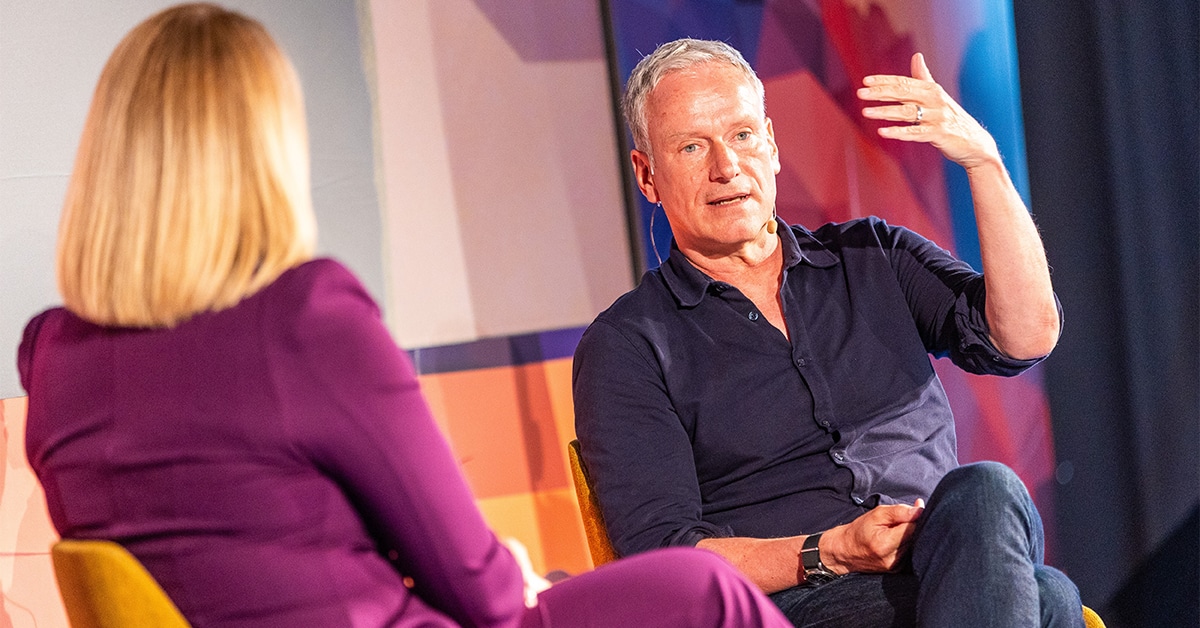
Speaking at NEM Dubrovnik, Jens Richter, CEO of commercial and international at Fremantle, laid out the content powerhouse’s growing digital footprint, the power of legacy brands, and the nimbleness needed to navigate a constantly shifting media ecosystem.
Richter opened by reflecting on how dramatically Fremantle’s content slate has shifted since the early 2000s, when the company was almost exclusively defined by its hit talent formats.
“Ten years ago, we were very much an entertainment shop, driven by the talent shows,” he said. “When we launched talent shows at the beginning of the 2000s, they went ballistic. They were the biggest thing that happened to the TV market, because you produce one episode and you produce 20 stories in that one episode. That is very unique for a TV show.”
That foundation in game shows and talent formats remains strong, Richter noted, but Fremantle has since built substantial muscle in two additional verticals: drama and factual. The drama push began around 2015, initially targeting premium subscription platforms as streamers entered the market. Over time, Fremantle worked its way into mainstream drama as well, a shift exemplified by Sullivan’s Crossing, a Canadian series for Netflix based on Robyn Carr’s bestselling novels, which Richter described as “super mainstream.” The show has been a tremendous hit on Netflix globally.
“We still do premium, but we also love mainstream,” Richter said.
On the factual side, Fremantle has pursued a similar dual-track strategy: premium documentaries with broad cultural appeal—recent titles include a three-part Michael Jackson documentary—alongside high-volume, long-running factual strands.
55 Billion Views and Counting
Richter also weighed in on the increasing need to have a strong social media footprint—not as a marketing add-on, but as a core distribution and engagement channel.
“Last year we did something like 55 billion views in social media,” across about 100 social channels, he noted.
Much of that volume is driven by talent competition formats, which are perfectly suited to social platforms. Every audition clip, performance, and judge reaction constitutes a self-contained story with a clear arc. But the social opportunity extends well beyond talent shows. Family Feud, for instance, generates strong viral moments when the right on-screen talent is in place, and Farmer Wants a Wife has demonstrated that even formats designed for linear broadcast can develop robust social identities.
A show’s social strategy is developed in close collaboration with commissioning partners from the outset, and leveraging the social footprints of high-profile cast members is key in marketing new and returning series.
Multi-Window Thinking
The broader shift Richter described was from producing a show for a single linear broadcaster to engineering every project for maximum reach across multiple windows and platforms.
“Twenty years ago, we produced a show for the linear broadcaster. Now that same show gets launched on that linear broadcaster, but we create social media around it, and we immediately think: what’s the second or third window for that show?” he said. “How can we build maximum reach beyond that launch broadcast?”
Farmer Wants a Wife in the U.S. is the perfect example. Produced for FOX, the show launches on linear, moves same-day to Fox’s on-demand service, FOX One, and can later find a home on Tubi. FOX is going a step further with the upcoming season, reconfiguring the format for vertical video and placing it on Holywater’s MyDrama vertical video app. “Farmer will then have another second or third life on the vertical,” he said.
The Return of an Iconic Brand
FOX has slated a Baywatch reboot for 2027. The show has already landed its first international deal, landing on Sky—that trade announcement was covered extensively in the U.K. consumer press.
“Baywatch was at its time the most successful TV drama, period; more than a billion people reached it every week,” Richter said. “When you revisit a show like that, you obviously build upon that brand name and brand recognition, which is still very strong in the market.”
Richter added, “Normally, you get picked up by the press when you launch a show—not when you buy a show that’s going to launch six months from now. Every stage of the casting process, you read it in the local newspaper. There is general excitement.”
Storytelling as the Constant
Ultimately, for all the structural change reshaping the industry, the heart of the business remains in creativity,
“Change is constant—how we reach our audience, how we build out our social media reach, how we build out our own video-on-demand platforms, how we share rights with other people—that is always evolving and pretty rapidly,” he said. “But at the end of the day, we are storytellers. Some stories are better than others. Our audience wants to be entertained, and they want to enjoy those stories. And that won’t change.”


