



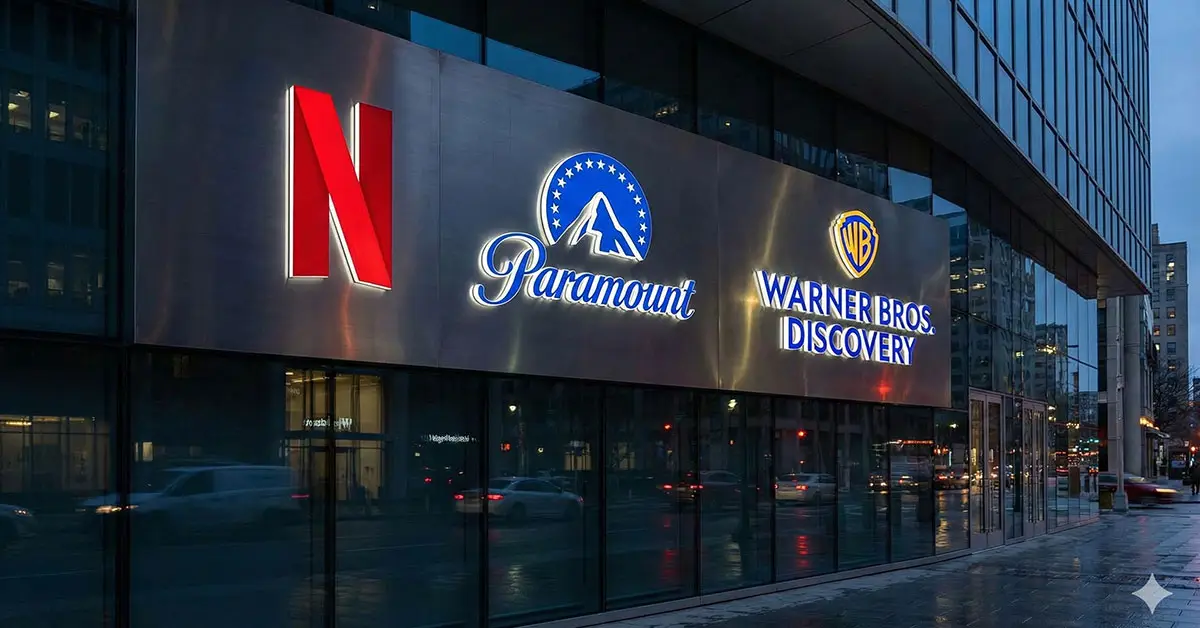
Warner Bros. Discovery’s board has unanimously rejected Paramount Skydance’s amended takeover offer, concluding that it is not in the best interests of shareholders and does not constitute a “superior proposal” under its Netflix agreement.
Paramount Skydance updated its all-cash tender offer to WBD shareholders on December 22 to include a personal guarantee from Larry Ellison.
“The board unanimously determined that the Paramount’s latest offer remains inferior to our merger agreement with Netflix across multiple key areas,” said Samuel A. Di Piazza, Jr., chair of the WBD board of directors. “Paramount’s offer continues to provide insufficient value, including terms such as an extraordinary amount of debt financing that create risks to close, and a lack of protections for our shareholders if a transaction is not completed. Our binding agreement with Netflix will offer superior value at greater levels of certainty, without the significant risks and costs Paramount’s offer would impose on our shareholders.”
The board’s letter to shareholders said the Paramount Skydance offer was inferior given “significant costs, risks, and uncertainties as compared to the Netflix merger.” With the Netflix deal, WBD shareholders will receive $23.25 in cash and shares of Netflix common stock representing a target value of $4.50 based on a collar range in the Netflix stock price at the time of closing, as well as ownership in Discovery Global, “which will have considerable scale, a diverse global footprint, and leading sports and news assets, as well as the strategic and financial flexibility to pursue its own growth initiatives and valuecreation opportunities,” the WBD board says.
Paramount Skydance is offering $30 per share for a unified WBD that would retain the Discovery Global assets. If WBD were to now reject the Netflix deal, it would be obligated to pay a $2.8 billion termination fee, plus a $1.5 billion fee for failing to complete its debt exchange, and interest expenses of approximately $350 million. “The total cost to WBD would be approximately $4.7 billion, or $1.79 per share. These costs would, in effect, lower the net amount of the regulatory termination fee that PSKY would pay to WBD from $5.8 billion to $1.1 billion in the event of a failed transaction with PSKY. In comparison, the Netflix transaction imposes none of these costs on WBD.”
WBD also continues to highlight a “lack of certainty” about Paramount Skydance’s ability to close the deal. “The extraordinary amount of debt financing, as well as other terms of the PSKY offer, heighten the risk of failure to close, particularly when compared to the certainty of the Netflix merger. PSKY is a company with a $14 billion market capitalization attempting an acquisition requiring $94.65 billion of debt and equity financing, nearly seven times its total market capitalization. To effect the transaction, it intends to incur an extraordinary amount of incremental debt—more than $50 billion—through arrangements with multiple financing partners.”
The Paramount Skydance deal falling into the leveraged buyout category—the largest in history, WBD tells shareholders—”poses materially more risk for WBD and its shareholders when compared to the conventional structure of the Netflix merger.”
The LBO risks are worsened by the debt Paramount Skydance needs to incur and a potentially protracted approvals process, WBD maintains. “PSKY already has a “junk” credit rating and it has negative free cash flows with a high degree of dependency on its legacy linear business. Certain fixed obligations that PSKY has incurred or may incur prior to closing, such as the multi-year programming and sports licensing deals, could further strain its financial condition,” the WBD letter continues.
“Further, the operating restrictions between signing and closing imposed on WBD by the PSKY
offer could damage our business, allowing PSKY to abandon the offer. The onerous covenants
include, among others, restricting WBD’s ability to modify, renew, or terminate affiliation
agreements. These restrictions may hamper WBD’s ability to perform and could lead PSKY to
assert that WBD has suffered a “material adverse effect,” enabling PSKY and its financing
partners to terminate the transaction or renegotiate the terms of the transaction.”
Touting Netflix’s financial health in the shareholder letter, WBD noted that the transaction provides it “with more flexibility to operate in a normal course until closing.”
The letter goes on to note: “PSKY has repeatedly failed to submit the best proposal for WBD shareholders despite clear direction from WBD on both the deficiencies and potential solutions. The WBD Board, management team and our advisors have extensively engaged with PSKY and its representatives and provided it with explicit instructions on how to improve each of its offers. Yet PSKY has continued to submit offers that still include many of the deficiencies we previously repeatedly identified to PSKY, none of which are present in the Netflix merger agreement, all while
asserting that its offers do not represent its “best and final” proposal.”
The Netflix deal, as negotiated, “maximizes value while mitigating downside risks, and we unanimously believe the Netflix merger is in your best interest. We are focused on advancing the Netflix merger to deliver its compelling value to you.”
In a statement, Ted Sarandos and Greg Peters, co-CEOs of Netflix, noted, “Netflix and Warner Bros. will bring together highly complementary strengths and a shared passion for storytelling. By joining forces, we will offer audiences even more of the series and films they love—at home and in theaters—expand opportunities for creators, and help foster a dynamic, competitive, and thriving entertainment industry.”
On Netflix’s site touting the benefits of the $82.7 billion transaction for Warner Bros., including its film and television studios, HBO Max and HBO, the company highlighted the opportunity to deliver greater choice and value to consumers, the benefits for the overall creative community and entertainment industry, and shareholder value.
“As fans of Warner Bros. and their beloved brands, we want to preserve—and expand on—what makes them special. We’re fully committed to releasing Warner Bros. films in theaters, with a traditional window, so audiences everywhere can enjoy them on the big screen. We plan to make sure HBO continues to create the prestige television shows that fans know and love. And with our global reach across 190-plus countries, we expect that these stories reach an even larger audience.”
The combination means greater variety and value for subscribers, the site maintains, and will not result in mass layoffs. “Netflix and Warner Bros. have complementary businesses, which is why we plan to continue operating them independently—with the teams that currently run them. We’ll also keep growing our long-term investment in original films and series and expanding U.S. production capacity. Over the last four years, we’ve contributed over $125 billion to the U.S. economy and hired more than 140,000 cast and crew members, filming across all 50 states. With Warner Bros., we’ll be able to do even more.”
On shareholder value, meanwhile, Netflix notes, “By offering members a wider selection of quality series and films, we’ll be able to attract and retain more members, drive more engagement, and generate incremental revenue and operating income. We expect to realize at least $2-3 billion of annual cost savings by the third year, and for the transaction to be accretive to GAAP earnings per share by year two.”


