
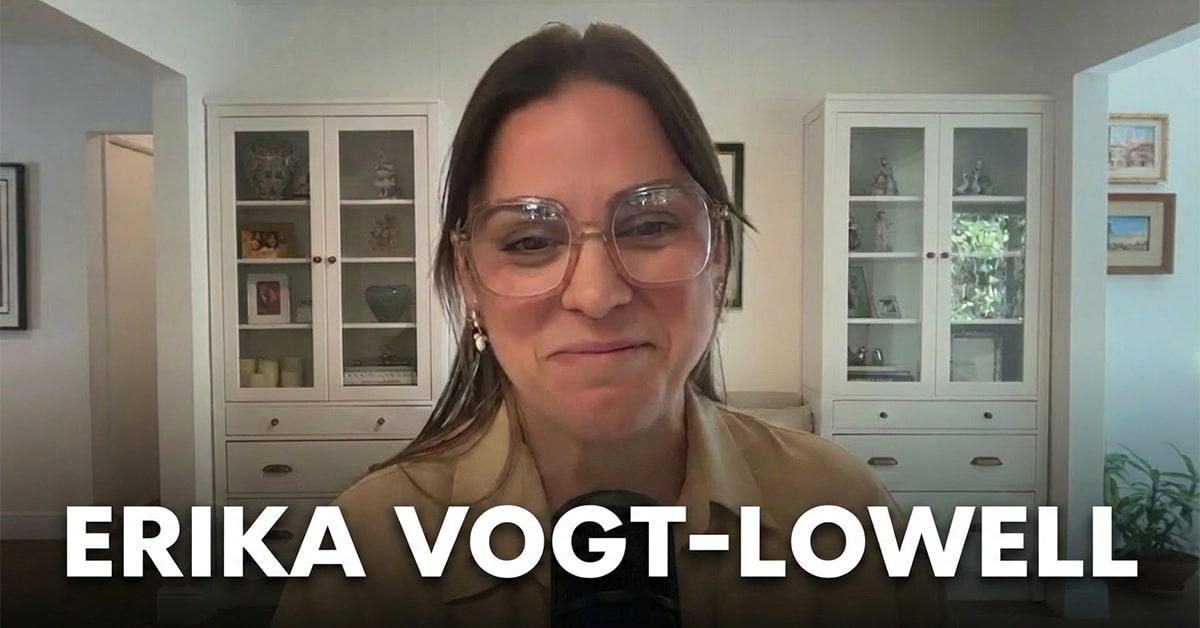
Our latest Gen A to Z episode of ScreenMDM Talks welcomes Erika Vogt-Lowell, VP of content at HITN, to talk about meeting the educational and entertainment needs of Spanish-language preschoolers at Edye, an SVOD platform that has expanded well beyond its U.S. Hispanic roots as it turns seven, with a footprint that runs across Latin America.
Edye has its roots as a preschool block on HITN, but as consumption habits shifted, the team knew that evolution was needed and shifted course to setting up an SVOD platform. Announced as a service purely for U.S. Hispanic audiences, the HITN team quickly responded to market demand for a LatAm version and later launched in Brazil with a Portuguese feed. Last year, zigging where others have been zagging, Edye arrived as a linear channel.


Childhood development is baked into Edye’s mission, with content carefully curated to deliver on the platform’s mission of educating and entertaining young viewers. “We’re not saying we’re 100% educational; we’re not saying we’re 100 % entertainment,” Vogt-Lowell says in the podcast, which you can watch on YouTube below or on Spotify here. “We fall in a really nice little spot right in the middle. Depending on what your child needs or what you feel you want your child to experience, we have that for you in a safe space. It’s a space where parents feel comfortable that their children won’t come across something that they shouldn’t.”
That mission includes creating parental guides for all the series on the service. “It provides parents a deep dive into what their children are watching, what they’re learning, and why it is that we selected that content for them.”
The content lineup, supplemented with books and other activities to engage kids off-screen, features a diverse mix of big, well-known brands and indie gems, intended to meet the needs of preschoolers, their caretakers, and the cable operators carrying the Edye linear network. “So we draw [audiences] in with the big ones, and they discover the new ones that we have on. We try to create a mix of everything that will appeal to not just children, but also parents, with some nostalgia in there, and then the cable operators to draw in more customers.”
On acquiring from the YouTube ecosystem, meanwhile, Vogt-Lowell notes, “It’s funny how when you see kids actually live user-generated content. They are living the content that they’re watching. It’s very difficult to say, no YouTube. There has to be some presence on YouTube. And we do have to balance, OK, it’s super popular on YouTube. Does it fit with us? Sometimes it does, sometimes it doesn’t, and that’s fine. Every production has its time and space, wherever it is. We recognize that YouTube is somewhere you have to be and a place you have to play a part in, whether as a marketing tool or as a business. It’s not going to go away. So, you know, you have to figure out how to work with it and incorporate it into your plans.”
As for what she’s looking for, Vogt-Lowell says it ultimately comes down to “content where I know someone will feel seen.” That has become harder as DEI initiatives have fallen to the wayside, she notes.
As it marks its 7th anniversary, the next stage of growth for Edye includes further original productions following the rollouts of ¿Cómo se dice? and Respira. “We have a couple of other things in the works in terms of short original content.”
Off-screen experiences are also key, she adds. “We are a content platform. So yes, we want children and the parents to understand that we’re on the screen. But we also understand that there’s a time and place for the screen and there’s a time and place for being outside and enjoying time and offering ideas for experiences and different things for parents to do with their children in the real world.”